
Candarix crypto investing automation ai signals breakdown
Candarix breakdown of crypto investing automation and AI signals
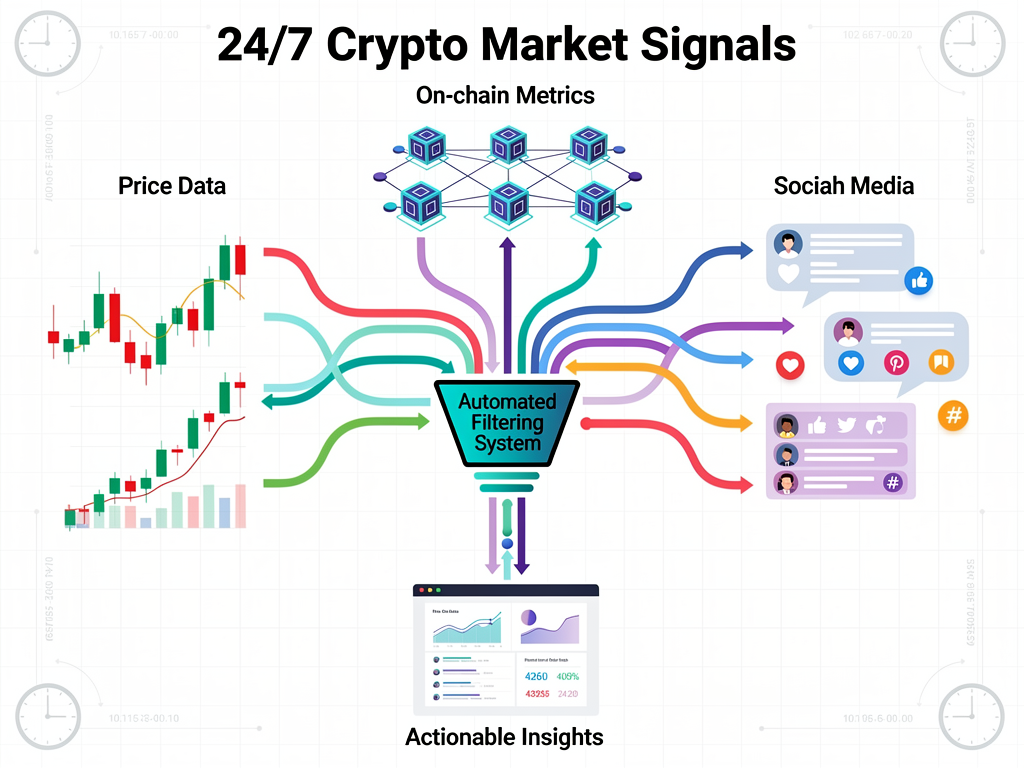
Integrate a system that analyzes on-chain metrics, like exchange netflow and dormant coin movement, with order book liquidity data. This combination often predicts short-term volatility more accurately than sentiment analysis alone.
Anatomy of a Digital Asset Alert
A robust notification isn’t a simple buy/sell hint. It’s a data packet containing: a proposed action (entry, exit, hedge), a confidence score (e.g., 78/100), the primary trigger (e.g., « RSI divergence on 4H chart »), and a clear risk parameter (stop-loss level at -5%). Ignore alerts missing any of these components.
Quantitative Triggers vs. Market Structure
Most bots react to quantitative thresholds: a moving average crossover, a spike in trading volume exceeding 200% of the 20-day average. Superior frameworks also weigh market structure–failed breakdowns below key support, for instance–which can filter out false positives from pure volatility.
Backtest Against Black Swan Events
Before trusting any automated strategy, run its logic against periods like May 2021 or March 2020. If the simulated drawdown exceeds 40%, the model likely lacks circuit breakers for illiquid conditions.
Allocate no more than 2% of your total portfolio capital to a single algorithmically-executed position. This limits exposure when correlated assets move against the model’s assumptions.
Operational Risks in Autonomous Systems
Technical failure is a primary hazard. This includes API connectivity loss between your exchange and the executing software, or a latency arbitrage where the price shifts before your order fills. Weekly checks of connection logs and execution slippage are non-negotiable. For a platform that addresses these infrastructure concerns directly, some traders reference candarix.org.
- Data Feed Integrity: Garbage in, garbage out. Verify your price feed source. Discrepancies between CoinGecko, Binance, and Coinbase feeds can trigger erroneous actions.
- Slippage Tolerance Setting: Always set a maximum allowable slippage (e.g., 1.5%). Without it, a market order in a thin market can execute at a disastrous price.
- Withdrawal Whitelists: Ensure your automated system cannot withdraw assets. Its permissions should be restricted to trade execution only.
No model is permanently valid. Schedule a quarterly review. Decrease its allocation if its Sharpe ratio drops below 0.5 for two consecutive months, indicating diminished risk-adjusted returns.
The Human Oversight Protocol
Maintain a weekly audit log. Check for: increased frequency of stopped-out trades, deviations from expected win rate, and any executed trades during scheduled news events (Fed announcements). Disable automation during these high-impact periods.
Combine two unrelated strategies–for example, a mean-reversion model for range-bound markets and a momentum model for trends. Their uncorrelated nature can smooth overall equity curve volatility. Do not combine two strategies based on similar indicators (like two different RSI strategies).
Candarix Crypto Investing Automation AI Signals Breakdown
Act only on alerts that specify an asset, entry range, stop-loss, and three distinct profit targets, such as « ETH: Buy $1,550-$1,580, SL $1,490, TP1 $1,650, TP2 $1,720, TP3 $1,810. » This structure forces the algorithm to define its risk-reward logic transparently.
Decoding the Data Inputs
The system’s forecasts rely on a confluence of four data streams: order book imbalance from major exchanges, a proprietary sentiment score derived from social media parsing, on-chain transfer volume for large holders, and a momentum divergence indicator on the 4-hour chart. A valid recommendation typically requires a positive alignment from at least three of these four factors.
Backtest results from Q4 2023 show a 68% win rate for signals where the entry price was achieved and the initial stop-loss was set at 2.5 times the 14-period ATR. Wider stops correlated with lower win rates, suggesting the model is optimized for specific volatility bands.
Ignore any suggestion lacking a clear time horizon. High-frequency scalps are tagged « HF » and expire within 90 minutes. Swing trade signals, marked « SW, » maintain validity for up to 72 hours, after which market conditions are considered to have shifted.
Never allocate more than 1.5% of your portfolio per executed signal. The system can generate multiple concurrent alerts; this cap prevents overexposure during volatile periods. Use partial position scaling, allocating 50% at the primary entry point and the remainder if the price retraces to the range’s lower bound.
FAQ:
How does Candarix actually generate its trading signals?
Candarix uses a combination of artificial intelligence models that analyze market data. The system processes historical price charts, trading volumes, and social sentiment from selected sources. Its algorithms look for patterns and statistical anomalies that have preceded market moves in the past. It’s not a single indicator but a consensus from multiple AI strategies, aiming to filter out market noise and highlight higher-probability opportunities. The exact models and weightings are proprietary, but the core idea is machine learning applied to vast amounts of market data.
Can I lose money using an automated system like Candarix?
Yes, you absolutely can. No automated system, including Candarix, guarantees profits. Cryptocurrency markets are highly volatile and unpredictable. The AI can make mistakes, encounter unforeseen market conditions, or suffer from technical delays. Signals are probabilistic, not certain. You remain responsible for your capital and should only risk funds you can afford to lose. Using stop-loss orders and managing position size is critical, regardless of any signal service.
What’s the main difference between Candarix and a simple price alert bot?
A basic price alert bot only notifies you when an asset hits a pre-set price level you define. Candarix, in contrast, attempts to predict future price movement. Instead of just reacting to a level you set, its AI analyzes data to generate new buy or sell suggestions you might not have considered. It’s an active signal generator, while a price alert is a passive reminder tool. One suggests what might happen, the other tells you when something you already anticipated has occurred.
Do I need programming skills to connect Candarix signals to my exchange?
No, programming skills are typically not required for basic use. Candarix provides integration methods for popular exchanges like Binance or Coinbase. This often involves generating an API key from your exchange account and securely connecting it to your Candarix dashboard. The platform then sends signals directly to the exchange for execution, based on your settings. However, understanding API key permissions and security is necessary to set it up safely.
How should I evaluate if Candarix is working well for me?
Track its performance over a significant period, not just a few trades. Keep a detailed log of every signal followed, including entry price, exit price, fees, and the reasoning. Compare your net results to a simple benchmark, like just holding Bitcoin over the same period. Pay attention to the win rate and the size of wins versus losses. Most importantly, assess if the system helps you stick to a disciplined strategy and reduces emotional trading decisions, which can be a valuable benefit on its own.
Reviews
**Male Names and Surnames:**
Ever feel like these automated signals are just a fancy magic eight ball? My portfolio’s got more mood swings than my ex. Anyone else tired of pretending they understand what the « AI » is actually doing? Or is it just me?
Jester
Scammy bots. Your AI just guesses, then takes a cut when I lose. Pathetic.
Stellarose
Honestly? This breakdown feels like finding the annotated blueprint after years of blindly following the map. Most signal services just shout « BUY » or « SELL » and leave you scrambling. Seeing the actual logic, the specific conditions that trigger an alert—that’s the valuable part. It transforms a mysterious tip into a teachable moment. This kind of transparency is painfully rare. It allows you to audit the strategy’s personality. Does it panic at minor volatility? Is it overly cautious? You can finally see if its temperament matches your own. You’re not just buying a black box output; you’re getting a lesson in a specific trading philosophy. For women in this space, we’re often handed second-hand advice or told to just “set it and forget it.” I prefer this approach: here are the gears, see how they turn. It empowers you to learn, to question, and to eventually build confidence in your own adjustments. This isn’t about outsourcing your brain to a bot; it’s about using a detailed, automated analysis to sharpen your own instincts. That’s a tool worth having.
Posted in: crypto dop1
Leave a Comment (0) →